
Posted by Daniele Zemignani – Realtor & Relocation Expert
There comes a moment in the life of everyone who dreams of Mexico when you stop looking at photos of sunsets in Puerto Vallarta and start looking at your passport. It’s the moment you move from “what if…” to “how do I…?”
Mexico isn’t just a dream destination. For nearly two million American citizens, it has become home — where the dollar goes further, where your pension lasts twice as long, and where quality of life isn’t a luxury but a routine. However, like any great love story, passion must be accompanied by paperwork.
Whether you’re a working professional, a remote worker in jeans and flip-flops, or a retiree who has hung up their work badge, this guide is your map. We’re talking numbers, requirements, and strategies — no sugar-coating.
Part 1: The Core of Everything – The Temporary Resident Visa
Before we talk about work or retirement, we need to clear up a common misconception: there is no official “digital nomad visa” in Mexico (at the time of writing), nor is there a visa just for employees.
The foundation of everything is Temporary Residency (Residente Temporal) . This is your golden ticket for anyone wanting to live in Mexico for 180 days to 4 years. Think of it as a magic container: inside it, depending on your income or situation, you can get permission to work for a Mexican company or live comfortably on your foreign-sourced income.
The Two-Step Process:
- Consulate (in the US): You apply here and get the actual visa stamped in your passport.
- INM (in Mexico): Within 30 days of your arrival, you must “exchange” that visa for a physical residency card.
Part 2: The Working Professional – The Dream of a Career Under the Sun
You’re young, skilled, and want to move to Mexico to work for a local company or a multinational based in Mexico City or Monterrey. The good news? Mexico is experiencing a nearshoring boom, and companies are hunting for talent, especially Americans with specific skills.
The Visa to Work in Mexico (Oferta de Empleo)
If you already have a job offer from a Mexican company, you can’t just apply for standard temporary residency. You need work authorization. And here’s a substantial difference from other paths: you cannot start this process alone.
The process is employer-driven:
- The company must be registered: Your future employer must be registered with the National Migration Institute (INM) and have their Constancia de Empleador.
- Request for authorization: The company submits a formal hiring request to the INM on your behalf, justifying the role.
- Go to the Consulate: Once the INM approves, you receive a file number (NUT). With that, you go to the Mexican consulate in the US to get the visa stamp.
- Finish in Mexico: You arrive and have 30 days to complete the registration.
Financial Requirements for a Work Visa?
Unlike the visa for “economic solvency,” the work visa is based on your job offer. However, the employer must prove the salary is sufficient. There are no fixed minimum figures as there are for retirees, but as a rule of thumb, the salary must be enough to live on.
How much does it cost? The consular fee is about $53 USD, plus the residency card (about $300 USD).
Validity: 1 year, renewable for up to 4 years. After 4 years, you can switch to Permanent Residency.
The Hidden Advantages for American Professionals
If you work for a Mexican company, you’re automatically enrolled in the IMSS (Instituto Mexicano del Seguro Social) . You’ll get free (or nearly free) public healthcare, access to a pension fund (even if you’re not thinking about it yet), and you’ll be able to buy a house with a local mortgage more easily.



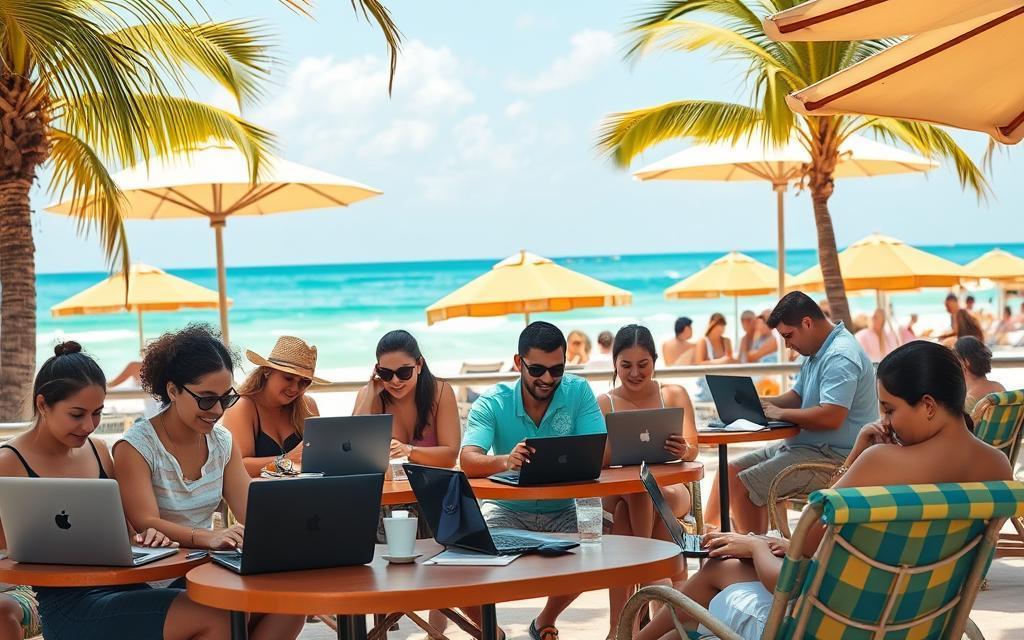
Part 3: The Remote Worker (Digital Nomad) – The Work-From-Home Revolution
This is you. You work for an American company, earn in dollars, but want to live in Playa del Carmen or Roma Norte in Mexico City, where the cost of living is lower and the quality of life is through the roof.
As mentioned, there’s no official nomad visa, but the solution is elegantly simple: Temporary Residency for Non-Lucrative Activities (or the Economic Solvency Visa). In essence, the Mexican state tells you: “If you can support yourself without taking a job from a Mexican, you can live here.”
The Economic Requirement (The Number You Need)
Here’s where we get into the nitty-gritty. Requirements vary slightly depending on the consulate (and the moon phase), but in 2026, these are the parameters. To prove your economic solvency, you must meet one of these two requirements:
- Income Option (most common for nomads): You must show a steady, net monthly income for the last 6-12 months. Figures vary.
- Low-end source: ~ $2,595 USD/month .
- High-end source (safer): ~ $4,185 USD/month .
- Advice: Aim for at least $3,500 USD/month to be safe with any consulate.
- Savings/Investments Option: If you don’t have steady income but have a nest egg. You must show an average balance over the last 12 months.
- Minimum: ~ $43,000 USD .
- Safe: ~ $69,750 USD .
Required Documents:
- Valid passport (at least 6 months).
- Bank statements from the last 6-12 months (stamped by the bank).
- Letter from your employer (English/Spanish) or freelance contract confirming your activity and that your income comes from abroad.
- Mexican-format photographs.
The Step-by-Step Process for the Remote Worker
- Book the Consulate: Unfortunately, you can’t do this entirely online. You need to find the Mexican consulate for your jurisdiction (e.g., Los Angeles, New York, Miami, Dallas) and book an appointment. Note: Wait times can be 2-3 months.
- The Interview: Go to the consulate with all your documents. The officer is primarily interested in ensuring you won’t work illegally in the local market. Explain you work remotely. This is usually very smooth.
- The Visa in Your Passport: They stamp it in your passport. From that moment, you have 180 days to enter Mexico.
- Canje (The Exchange): As soon as you arrive in Mexico (e.g., Cancun or CDMX), you have 30 days to go to the local INM office. There, you do the Canje: surrender the visa and receive your Temporary Residency Card (valid for 1 year).
Watch Out for Taxation!
If you stay in Mexico for more than 183 days in a calendar year, you become a Mexican Tax Resident. You will need to declare your worldwide income in Mexico. However, the US-Mexico tax treaty saves you from most double taxation issues (you pay taxes where you are resident, but often professionals pay in the US and claim exemption in Mexico, or vice versa). Advice: After your first year, hire a local accountant (a Contador). They’re inexpensive and save you headaches.


Part 4: The Retiree – The American Dream at Half Price
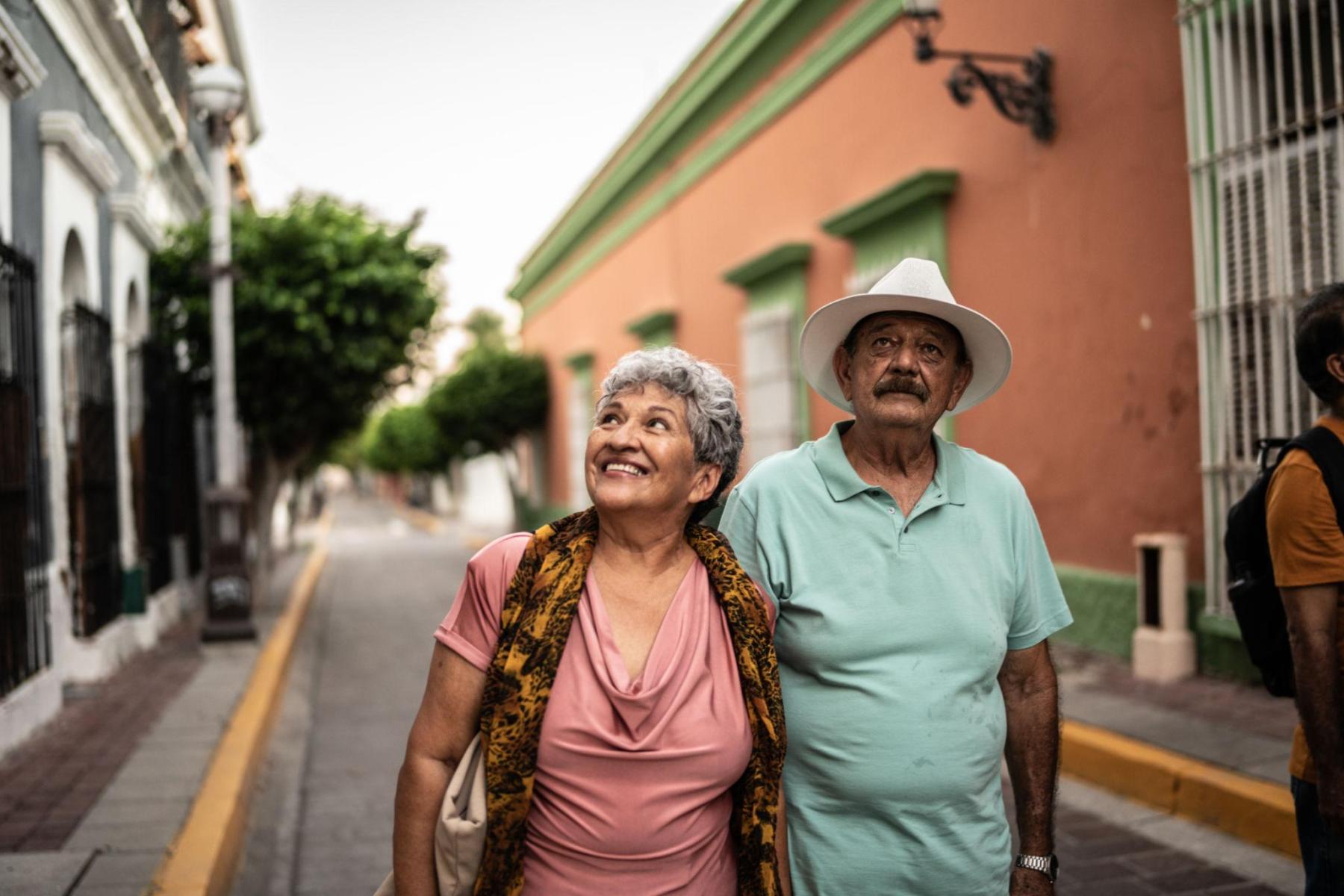
This is the largest segment and probably the simplest. You’re retired (or almost retired), you have your Social Security or a company pension, and you just want to live well. Mexico loves you.
Again, you’ll use Temporary Residency, but retirees with high income can often aim directly for Permanent Residency, skipping the 4 years of renewals.
Requirements for Retirees (2026)
The figures for retirees are slightly higher than for nomads, because it’s assumed you will no longer be working.
- For Temporary Residency (1-4 years):
- Monthly income: ~ $4,300 USD/month (pension + Social Security) .
- Savings/Investments: ~ $70,000 – $72,000 USD .
- For Direct Permanent Residency:
- Monthly income: ~ $5,500 – $7,200 USD/month .
- Savings/Investments: ~ $220,000 – $300,000 USD .
The Real Cost of Living (Dollars vs. Pesos)
Here’s why it’s worth it. A retired couple at Lake Chapala or on the Riviera Maya lives like royalty on about $1,800 USD per month .
Sample monthly budget for a couple (mid-to-high lifestyle):
- Rent (2-bedroom house with garden): $500 – $700 USD
- Grocery shopping (Meats, fresh vegetables, wine): $400 USD
- Utilities (Electricity, water, gas, fiber internet): $150 USD
- Health (Private insurance – essential): $300 – $400 USD
- Eating out (3-4 times a week): $300 USD
- Transportation (Car, gas, Uber): $150 USD
Total: $1,800 – $2,100 USD.
Compared to Miami, Dallas, or San Diego, you’re living at about 35-40% of the cost. If you have a $4,000 USD monthly pension, you live like a pasha.
Healthcare Coverage (The Hot Topic)
Medicare does NOT cover Mexico. Period.
You need private Mexican or international insurance. However, costs are reasonable:
- A private specialist visit: $40 – $60 USD.
- Comprehensive insurance for over-60s: $1,500 – $3,000 USD per year .
The alternative is voluntarily enrolling in IMSS (the Mexican public system), which costs about $400-$500 USD per year, but wait times can be long. Serious retirees choose private healthcare: hospitals like Hospiten or Costamed on the Riviera Maya are excellent.

Part 5: The Common Process – Official Documents and Costs
Regardless of your category (employee, nomad, or retiree), there are bureaucratic constants you need to know to avoid going crazy.
The Shopping List (Documents)
- Passport: Original and copies of relevant pages.
- Photo Format: Specific to Mexico (bare face, white background, size 3.9 x 3.1 cm). Don’t use old photos .
- Proof of income: Bank statements (US banks are fine). They must show the flow of money. Caution: sudden “gift” transfers from your father a month before don’t work; they want history from the last 6-12 months.
- Application Form: Completed online before your appointment.
The Cost Table (2026)
Attention: Consulates are applying new fees in 2026.
| Type of Permit | Consular Fee (Visa) | INM Fee (Card) | Estimated Total |
|---|---|---|---|
| Temporary Residency (1 year) | ~ $53 USD | ~ $300 USD | $353 USD |
| Temporary Residency (3 years) | ~ $100 USD (varies) | ~ $600 USD | $700 USD |
| Work Permit | ~ $53 USD | ~ $300 USD | $353 USD (often company-paid) |
| Permanent (Direct) | ~ $53 USD | ~ $400 USD | $453 USD |
Note: If you request multiple years of temporary residency upfront (e.g., 4 years), you save on the annual card fee, but the initial outlay is higher .
Part 6: Permanent Residency and Citizenship
How to Get Permanent Residency
If you have held Temporary Residency for 4 continuous years, you have the right to convert to Permanent Resident.
Exception: US citizens can request Permanent Residency directly if they have family ties to Mexicans or if they demonstrate very high income (> $5,500 USD/month).
Permanent Residency never expires. It is peace of mind. You never have to set foot in migration offices again except to change your address or renew your physical card every 10 years.
What About Citizenship?
If you want a Mexican passport (useful for travel, but does it make you lose some US voting rights? Spoiler: no, dual citizenship is allowed), you must have resided in Mexico for 5 years as a permanent or temporary resident. You will need to demonstrate Spanish proficiency (level B1/B2) and pass a history and culture exam.
Conclusion: The First Step is the Hardest
Moving to Mexico is not like booking a vacation. It is an investment in your future happiness. The bureaucracy is straightforward, as long as you respect the rules. The most common trap is thinking you can live on the simple FMM (Tourist) form for 180 days. If you do that, after 3-4 years of coming and going, the INM could bar you from entering. Live here legally.
Whether you come to lead a startup in Guadalajara, to write code in Tulum, or to sip tequila on the shores of Lake Chapala, Mexico welcomes you with open arms (and warm enchiladas).
Are you ready to take the big step? contact me at +16503037404 ( whatsapp ) or by mail : rivieramayablue@gmail.com
Disclaimer: Immigration laws (Ley de Migración) are subject to change. The figures reported here are updated to 2026 based on INM sources and major consulates. It is always recommended to verify on the website of the Mexican consulate in your jurisdiction before applying.




Nessuna risposta.